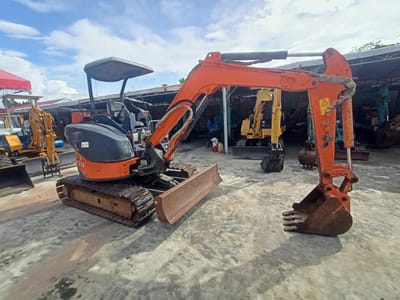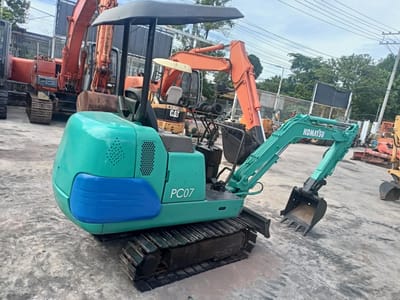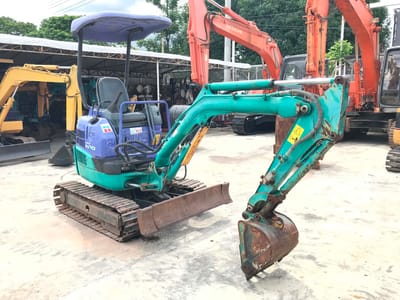

What's being built: construction equipment demand in Cambodia
Cambodia's Ministry of Land Management, Urban Planning and Construction reported 3,503 approved construction projects in 2025, with more than 18 million square metres of floor area and an estimated US$7.32 billion in investment, up 68.89% on 2024. Residential construction made up 2,724 of those projects, worth more than US$2.5 billion, and 228 projects involved high-rise buildings of five storeys and above.
The Ministry of Economy and Finance counts approvals differently. It reported 4,148 approved construction project applications in 2025, up from 3,243 in 2024, with investment capital up 48.3%, and it named residential housing, industrial centres, commercial buildings, and public facilities as most of the approvals. Outside the construction figures, the Council for the Development of Cambodia approved fixed-asset investment projects worth around US$10 billion in 2025, about 45% more than the year before.
Matching a used excavator to the job
The job and the site access decide the machine. This table is a starting point for heavy equipment in Cambodia, and the spec sheet of each machine settles the final choice.
| Work | Machine to start from | What to look for |
|---|---|---|
| House and shophouse foundations in town | 1 to 3-tonne mini excavator | Width that fits the narrowest access point |
| Utility trenches and drainage | 1 to 5-tonne excavator with a narrow bucket | Dig depth on the spec sheet against your deepest trench |
| Factory and warehouse site preparation | 13 to 20-tonne excavator | Bucket capacity and undercarriage condition |
| Rural roads and irrigation canals | 7 to 20-tonne excavator | Reach along the canal bank, and steel tracks |
| Breaking concrete and rock | Excavator with breaker piping | Working auxiliary lines and a matched breaker |
Ground and weather
Cambodia's rainy season leaves many sites soft for months. Rubber tracks suit finished surfaces and town work, and steel tracks with wider shoes hold up better in mud and on rock. A machine bought for a dry-season start needs to arrive before it, since auction sourcing and ocean freight both take time.
What to check on a used Japanese excavator
The same checks apply anywhere: the hours against the year and the wear, the undercarriage, the swing, the hydraulics, and the engine from cold. Our mini excavator checklist sets them out in a table, and the same table works for larger machines.
Parts and attachments
Ask what comes with the machine (buckets in more than one width, a blade, and breaker piping) and ship it all in the same container. Where parts are hard to get locally, a starter kit of filters and wear parts can travel with the machine. Workline supplies genuine and surplus spare parts from Bacolor.
Sourcing Japanese heavy equipment for Cambodia
Japanese construction machinery auctions sell machines from Caterpillar, Komatsu, Kubota, Hitachi, Takeuchi, Mitsubishi, and others. Workline sources from those auctions through its main office in Japan. For a Cambodian project, start with an auction request, and read the import taxes and documents for Cambodia before you budget.