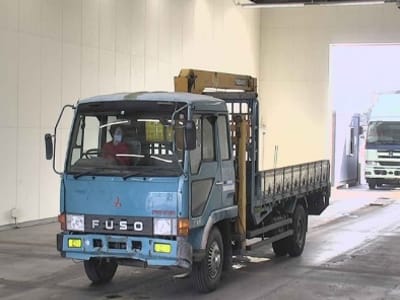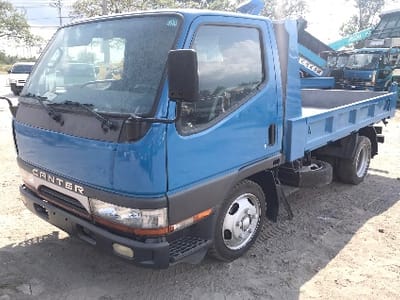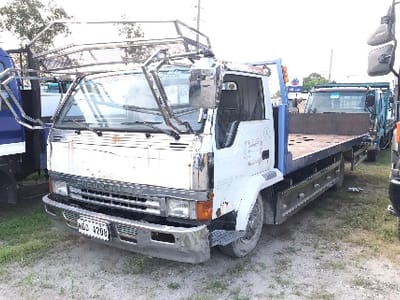

What Japan surplus means
In the Philippine trade, a Japan-surplus truck or machine is a used unit that worked in Japan's domestic market, was deregistered there, and was exported. The term describes origin. It says nothing about the condition of one particular unit (we check every vehicle before it's listed on this site).
Japan's inspection cycle for trucks
Registered motor vehicles in Japan go through shaken, the national inspection and registration system, and trucks run on a shorter cycle than private cars. Trucks over 8 tonnes are inspected every year from new. Trucks under 8 tonnes get two years before their first inspection and one year after that.
An annual inspection doesn't make a truck new. What it gives a buyer of used trucks from Japan is a truck that spent its working life in a system where brakes, lights, steering, and emissions were checked on a fixed schedule.
The emission rule that moves trucks out of Japan's cities
Japan passed the Motor Vehicle NOx Law in 1992, and a 2001 amendment added particulate matter and renamed it the Automotive NOx and PM Law. It covers commercial cargo vehicles (trucks, vans, and buses), special purpose vehicles, and diesel passenger cars in designated areas. The first designation covered 196 communities across the Tokyo, Saitama, Kanagawa, Osaka, and Hyogo prefectures.
The law works through the inspection system. A truck that doesn't meet the standard can't pass inspection in a designated area once its grace period runs out, and the grace period depends on the truck's first registration date. An owner in those areas can retrofit the truck, sell it outside the designated area, or sell it for export. A Japanese study of the law found no statistically significant drop in used truck prices, and it did find an increase in used truck exports.
How a truck becomes an export unit
A registered vehicle leaving Japan is deregistered first. Under the Road Vehicle Law amendment in force since January 2005, the owner applies for registration deletion and gets the certificate before the vehicle ships. That export certificate lists the chassis number and the registration history, and it's the document to match against the plate on the truck. The export steps from auction to shipping cover the rest of the paperwork.
What Japan surplus doesn't tell you
Origin is a starting point. These checks decide whether one particular unit is a good buy:
| Check | Why it matters |
|---|---|
| Chassis and engine numbers | They should match the export certificate and, in the Philippines, the import and registration papers. |
| Underbody rust | Trucks from the snowy parts of Japan run on salted roads in winter. |
| Steering conversion | Japanese trucks are right-hand drive. In the Philippines they're converted to left-hand drive before registration. |
| Hydraulics | Dump bodies, self loaders, and cranes have pumps, cylinders, and PTOs that wear on their own schedule. |
| Hours on equipment | Crawler excavators don't drive on public roads, and their record is the hour meter and the wear pattern. |
Japan-surplus heavy equipment works on a different record
Crawler excavators and most construction machines work off the road. Their history comes from the hour meter, service records, and the auction evaluation. How Japan's heavy equipment auctions work explains how those machines are graded and sold.